
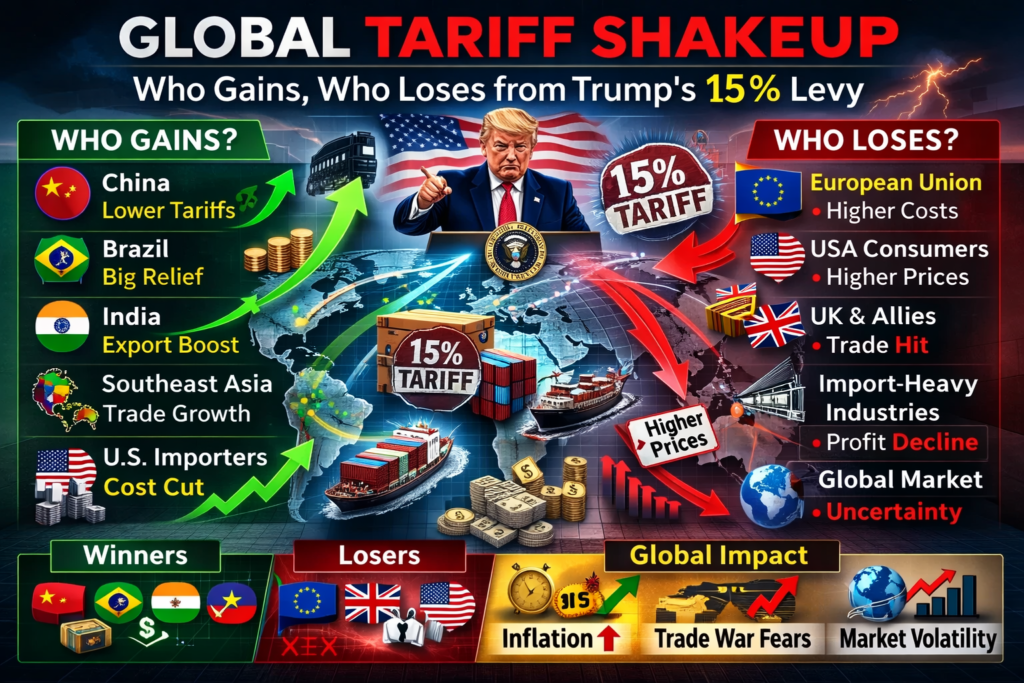
Global Tariff Shakeup: Who Gains, Who Loses from Trump’s 15%

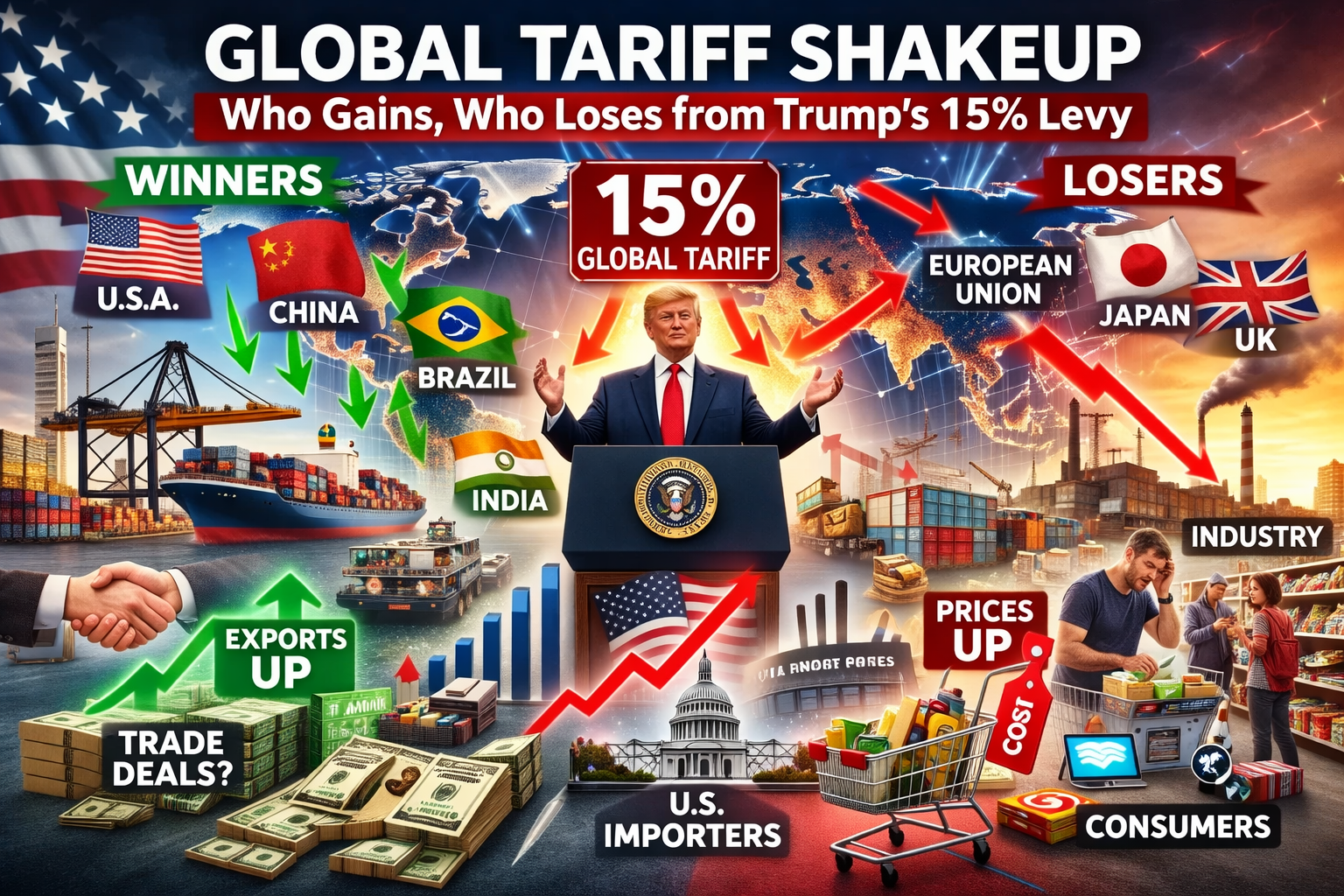
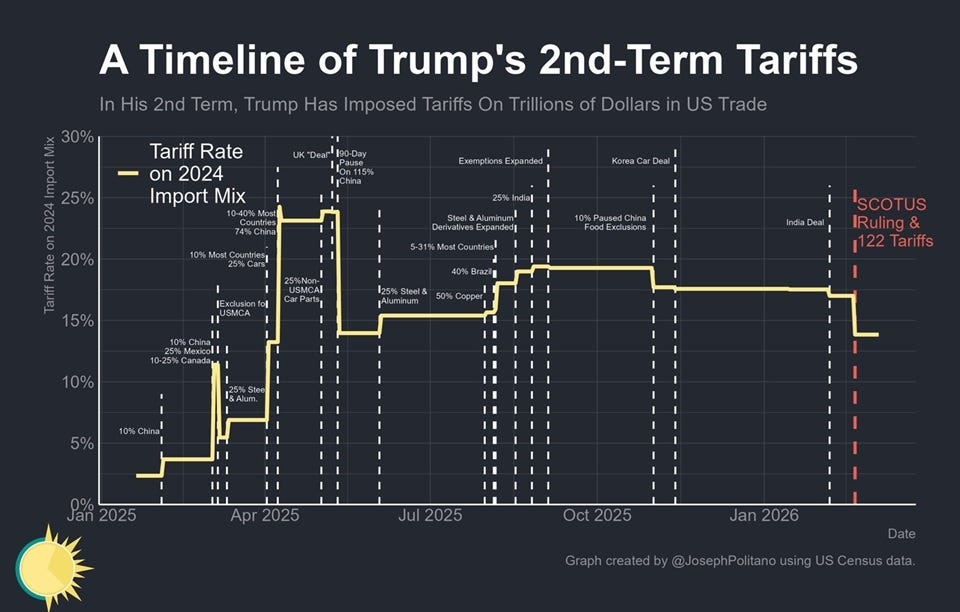
In the ever-evolving landscape of international trade, the recent imposition of a 15% global tariff by President Donald Trump has sent shockwaves through economies worldwide. This move, dubbed the “Trump 15% levy,” comes on the heels of a landmark U.S. Supreme Court ruling on February 20, 2026, that struck down Trump’s previous “reciprocal” tariffs imposed under national emergency powers. Effective from February 24, 2026, this temporary tariff under Section 122 of the Trade Act of 1974 applies a blanket 15% duty on nearly all U.S. imports, lasting 150 days unless extended by Congress. As global markets adjust to this Trump tariffs 2026 shakeup, clear winners and losers are emerging, reshaping supply chains, consumer prices, and bilateral trade relationships.
The Trump 15% tariff impact is multifaceted, acting essentially as a tax on American consumers and businesses. Economic analyses estimate that these tariffs could raise federal revenues by about $79 billion in 2026, equivalent to 0.25% of GDP, marking one of the largest tax hikes in recent decades. However, studies show that nearly 90% of tariff costs are passed on to U.S. firms and households, potentially adding $700 to $1,300 annually per household. Despite aims to reduce the U.S. trade deficit, historical data indicates tariffs merely divert trade to other countries without significantly narrowing the overall imbalance. Investors have largely shrugged off the announcement, with stock markets dipping only marginally, viewing the levy as temporary.
Winners from the Trump 15% Tariff: Emerging Economies Gain Ground
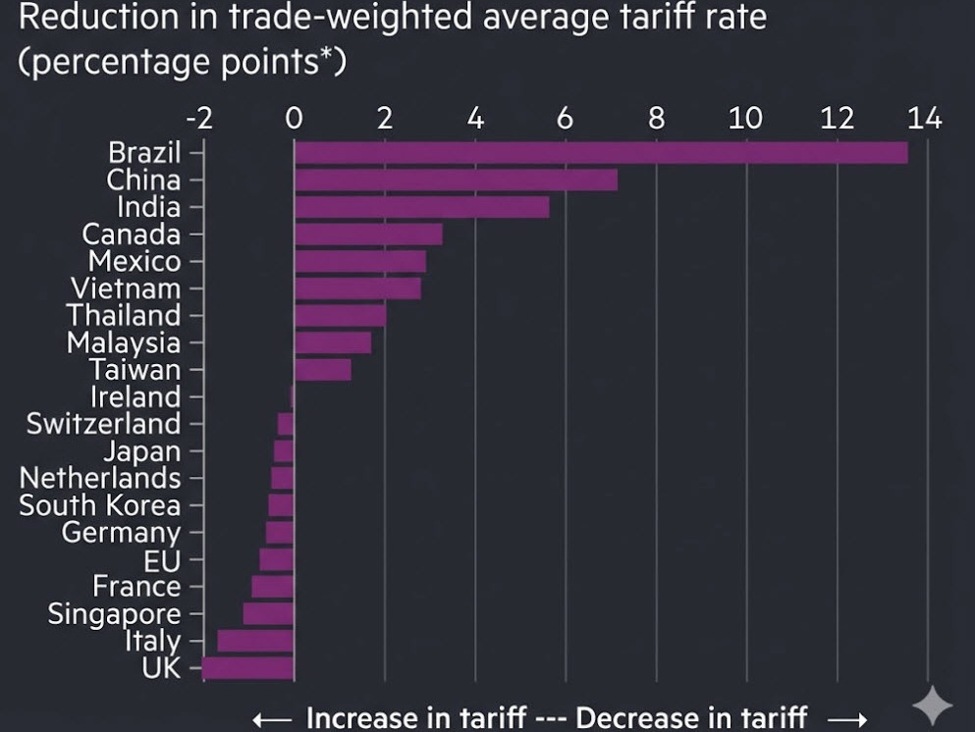
Paradoxically, some of the biggest beneficiaries of this global tariff shakeup are nations previously hit hardest by Trump’s targeted duties. Brazil tops the list, enjoying a staggering 13.6 percentage point reduction in average tariffs on its exports to the U.S., boosting competitiveness in commodities like soybeans and steel. China, often portrayed as the primary target of Trump’s trade wars, sees a 7.1 percentage point drop, easing pressures on its manufacturing sector after facing rates as high as 50% under the old regime. This levels the playing field, allowing Chinese goods to compete more favorably against those from U.S. allies.
India also emerges as a key winner in the winners and losers Trump tariffs narrative, with reduced duties on textiles, pharmaceuticals, and IT services potentially spurring export growth. Other developing economies like Vietnam, Mexico, and Thailand benefit from similar tariff cuts, as their previous higher rates are slashed to the uniform 15%. For these countries, the Trump 15% levy represents a reprieve, fostering increased trade volumes and economic stimulus amid global uncertainty.
This chart illustrates the shifts in tariff rates, highlighting how emerging markets are poised for gains:

Losers from the Trump 15% Tariff: Allies Face Unexpected Hits
On the flip side, long-standing U.S. allies that negotiated preferential deals under the reciprocal tariff system are now the primary losers. The United Kingdom, which secured a 10% rate on key exports like steel and pharmaceuticals, faces a 5 percentage point increase to 15%, potentially hampering post-Brexit recovery efforts. The European Union, including powerhouses like Germany and France, will see tariffs rise on automobiles, machinery, and wine, eroding the benefits of their hard-won agreements. Japan, too, loses its edge, with higher costs on electronics and vehicles likely to strain trans-Pacific trade.
Singapore and Australia join this group, with experts warning of weakened global growth and inflationary pressures. These nations, having bent over backwards to strike deals, now question the reliability of U.S. trade commitments, sowing chaos in ongoing negotiations. Domestically, American consumers bear the brunt, as higher import prices trickle down to everyday goods, disproportionately affecting low-income families. U.S. exporters may also suffer retaliatory measures, further damaging America’s global standing.
The timeline below underscores the rapid evolution of Trump’s tariff policies, culminating in the current 15% levy:

Broader Implications of the Global Tariff Shakeup
Beyond immediate winners and losers, the Trump tariffs 2026 could exacerbate inflation, slow U.S. economic growth, and disrupt supply chains already strained by geopolitical tensions. Critics argue that tariffs fail to revive manufacturing jobs, with employment in the sector remaining flat despite years of protectionism. Instead, they advocate for multilateral approaches to address trade imbalances.
As the 150-day clock ticks, Congress’s decision on extension will be pivotal. For now, this levy highlights the precarious nature of global trade under unilateral policies. Businesses and governments must adapt swiftly to mitigate risks in this new era of Trump 15% tariff impact.